

Why We Keep Having the Same Fight
Relationship Counseling in San Francisco
It rarely starts as a big issue.
Maybe it’s about dishes. Or tone. Or someone being late. Or how often you have sex. Or how much time one of you spends working.
But within minutes, you’re no longer arguing about the surface issue. You’re arguing about something that feels much older. Much deeper.
Many couples in San Francisco tell me the same thing:
“We keep having the same fight.”
“It’s like we’re stuck in a loop.”
“We say we’ll do better, but it happens again.”
“It escalates so quickly.”
If this sounds familiar, you’re not alone. Repeated arguments are one of the most common reasons couples seek relationship counseling.
The Fight Isn’t About What You Think It’s About
When couples argue repeatedly, the conflict is rarely about the literal topic.
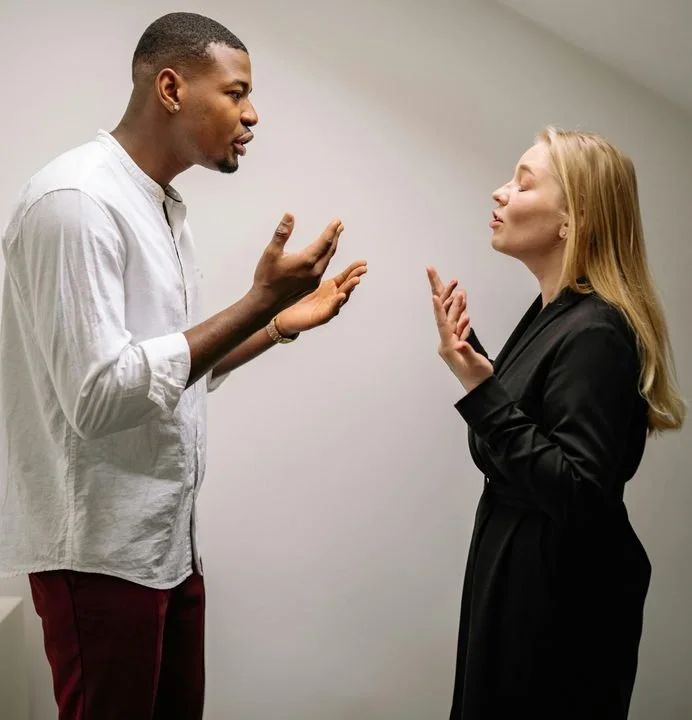
It’s not really about:
the laundry
the text that wasn’t returned
who initiates sex
money
how plans were made
Those are triggers.
The real argument is usually about something emotional underneath:
“Do I matter to you?”
“Am I safe with you?”
“Do you see me?”
“Will you choose me?”
“Am I enough?”
Research from the Gottman Institute shows that most relationship conflicts are not fully “solvable” — they are rooted in deeper personality traits, attachment patterns, and emotional needs that repeat over time.
When couples don’t understand the emotional meaning behind their arguments, they fight the surface issue again and again.
The Escalation Pattern
In therapy, we often slow down a recent argument and look at it frame by frame.
It usually follows a predictable pattern:
One partner feels disappointed or hurt.
They protest — maybe with criticism, frustration, or intensity.
The other partner feels attacked or inadequate.
They defend, withdraw, or shut down.
The first partner feels even more alone.
And the cycle repeats.
Attachment research consistently shows that when one partner pursues and the other withdraws, both partners are reacting to fear — just in opposite ways.
In San Francisco, where work stress, tech culture, long hours, and financial pressure are common, couples are often already emotionally depleted before the argument even begins.
Why the Same Fight Feels Bigger Each Time
Repeated fights accumulate emotional residue.
What starts as a small conflict becomes layered with:
past disappointments
unresolved resentments
sexual rejection or avoidance
feeling unappreciated
feeling emotionally alone
For example, a disagreement about initiating sex may actually represent:
“You don’t desire me.”
“I feel rejected.”
“I’m afraid you don’t want me anymore.”
Or a fight about work hours may really mean:
“I don’t feel prioritized.”
“I miss you.”
“I’m afraid we’re drifting.”
Over time, couples begin reacting not only to the current moment — but to every similar moment before it.
That’s why the argument feels so intense.
San Francisco Couples Face Unique Stressors
Living in San Francisco adds specific relational pressures:
High cost of living → financial anxiety
Competitive careers → limited emotional bandwidth
Tech culture → constant availability to work
Social comparison → insecurity
Mobility → unstable friend networks
Queer and poly relationship structures → require nuanced communication
These external pressures amplify existing emotional vulnerabilities.
Couples therapy becomes a stabilizing space — one where the relationship slows down enough to actually be understood.
The Fight Beneath the Fight
When we slow down the cycle in relationship counseling, something important happens.
Instead of:
“You never listen.”
“You’re too sensitive.”
“You always overreact.”
We begin to hear:
“I’m afraid you’ll leave.”
“I feel like I’m failing you.”
“I don’t know how to get close without messing it up.”
The fight shifts from attack and defense to vulnerability and clarity.
And that changes everything.
What Couples Therapy Actually Does
Couples therapy is not about deciding who is right.
It’s about identifying the pattern — the emotional choreography that keeps repeating.
In psychodynamic and relational couples therapy, we explore:
how early family experiences shape conflict style
how attachment patterns show up in adult intimacy
how sex and emotional closeness intersect
how shame fuels defensiveness
how fear fuels withdrawal
how unmet needs get expressed as criticism
Research consistently shows that couples who learn to recognize their interaction patterns experience improved relationship satisfaction and reduced distress
https://www.apa.org/monitor/2014/04/couples
When partners understand the emotional meaning behind their reactions, arguments become less explosive and more productive.
Why We Repeat Patterns We Hate
One of the most painful parts of repeated fighting is this:
You don’t want to fight this way.
You know it’s hurting the relationship.
But in the moment, you can’t seem to stop.
That’s because conflict reactions are rarely conscious. They are learned survival strategies. They developed long before this relationship.
Couples therapy helps bring those automatic patterns into awareness — and once something is understood, it can change.
FAQs: Why Do We Keep Having the Same Fight?
Is it normal to have the same argument repeatedly?
Yes. Many couples have recurring conflict themes rooted in deeper attachment needs.
Does repeated fighting mean we’re incompatible?
Not necessarily. It often means the emotional meaning of the fight hasn’t been understood yet.
Can therapy really change long-standing patterns?
Yes. When couples understand the cycle and learn to respond differently, the pattern can shift.
What if sex is part of the conflict?
Sexual desire, rejection, and intimacy are common sources of repeated arguments — and they are important parts of couples therapy.
Do you take sides?
No. The focus is on the relational pattern, not blame.
If You and Your Partner Keep Having the Same Fight
If arguments feel repetitive, escalating, or emotionally draining, relationship counseling can help you step out of the loop.
I offer relationship counseling and couple therapy in San Francisco for partners who want to:
understand their conflict pattern
reconnect emotionally
rebuild intimacy
repair after repeated fights
strengthen communication
deepen sexual and emotional closeness
You don’t have to keep replaying the same argument.
Sometimes the fight is not the problem — it’s the doorway to something that needs to be understood.
